

From 11 to 18 October, our CEO Andreas Haugen and CMO Magnus Haugen were in Washington D.C. and Arlington, Virginia, with the NATO DIANA U.S. Market Access program. The clearest message from a week of meetings: Energy security has become a top issue in the United States, and protecting the power grid sits at the centre of it.
We went to meet the people who will test, buy and use Observer in the United States. The NATO DIANA U.S. Market Access program gave the week its structure, with introductions, meetings and access to the American defence and security community. We wrote about the plan before we left, in Into the U.S. market with NATO DIANA.
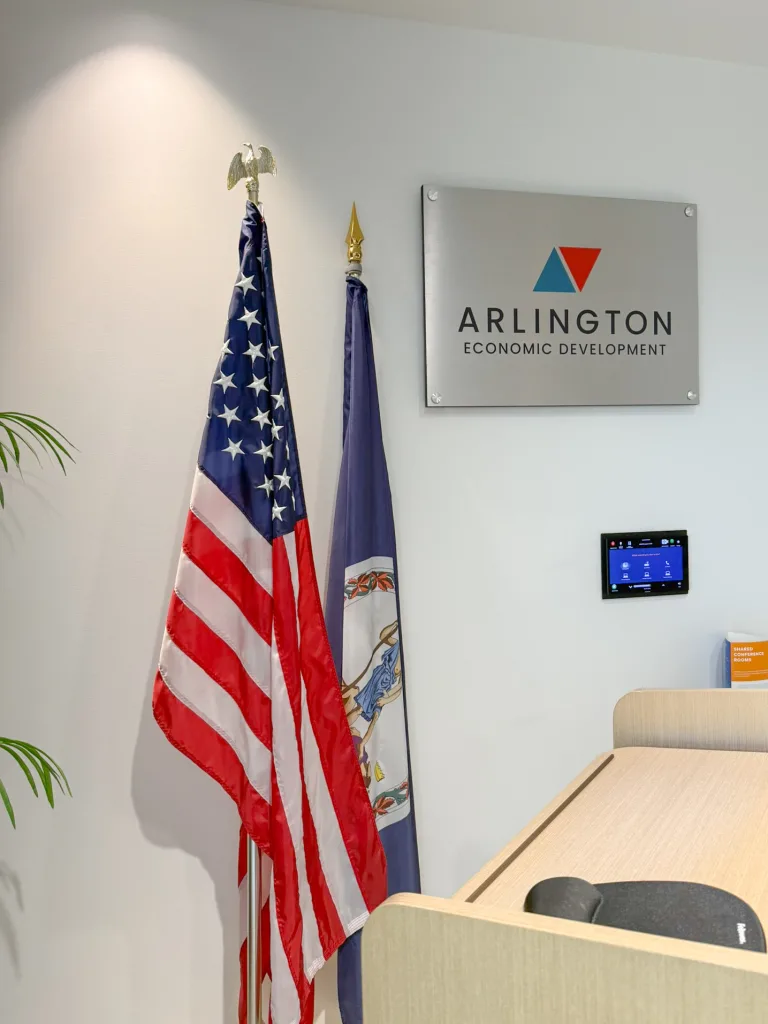
Admission to the program builds on six months in the NATO DIANA accelerator, which ended with Demo Day in June. Observer is in production, and pilot customers in Norway are testing it on their own networks. Earlier visits to the United States gave us meetings we have kept building on, with American counterparts who share our view of grid companies as holders of critical infrastructure with a national security dimension.
The program opened with an introduction to how foreign companies work their way into the U.S. defence sector: Who buys, how procurement is organised and how long the road usually is. For a company from the northern part of Norway, that is knowledge you cannot read your way to. We came home with new contacts, and several of them are relationships we expect to build on over time.
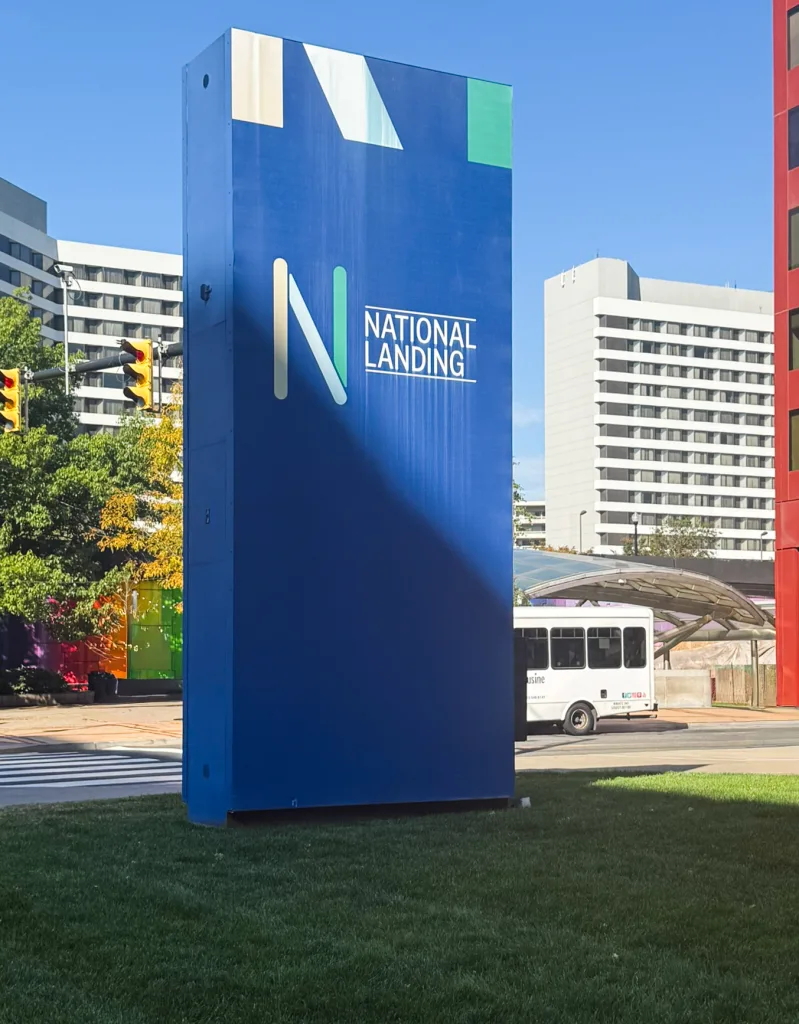
The answer is quite clear – it is because Arlington is where the most companies serving the Pentagon have their offices. Much of the week took place in Arlington, Virginia, and especially in National Landing, the district next to the Pentagon where many of the largest defence and technology companies are located, close to the political decision-making in the American capital.
The week was built around the AUSA Annual Meeting & Exposition, held from 12 to 14 October at the Walter E. Washington Convention Center. The trip also coincided with NADIC AUSA Week. NADIC, the Norwegian-American Defense Industry Council, is a membership-based trade organisation that strengthens Norwegian companies’ position in the American market, together with the Norwegian Embassy, the Norwegian Defence Research Establishment (FFI) and Innovation Norway, among others.
Because electricity demand is growing faster than the grid is being built, and every other part of critical infrastructure depends on that grid. This was the most important takeaway from the week. Energy security is no longer a European conversation only. In Washington it was a top issue, tied directly to securing critical infrastructure.

The numbers explain why. In its 2025 Long-Term Reliability Assessment, presented in January 2026, the North American Electric Reliability Corporation (NERC) forecasts that summer peak demand will rise by 224 GW over the next ten years, and warns that more regions than before face elevated reliability risk. Military bases, hospitals and the communities around them all depend on the same lines.
– Energy security is becoming a top issue in the United States as well, and securing critical infrastructure is a big part of it. Our sensors and cameras help bring more security to the power grid, so Observer is a good fit over there too. – Andreas Haugen, CEO of Avju Solutions.
On the line itself. Observer units are mounted directly on the power line, draw their power from it and monitor the grid continuously with sensors and cameras. The data is read in Gridvju, our analytics platform. Using artificial intelligence, Gridvju detects vegetation that threatens the lines, gives early warning of fire risk and shows transmission capacity in real time. That gives the grid operator a real-time picture of what is happening along the lines, instead of a snapshot from the last inspection.
The hardware is proven in Arctic conditions in Northern Norway, where cold, ice and wind test every component. Our customers at home, including Noranett, use it to move from repair after the fact to preventive maintenance. That experience is what we bring across the Atlantic.
– The week gave us new contacts that we will build on over time. What struck me was how closely the conversation about the grid and the conversation about national security are connected in Washington. – Magnus Haugen, CMO of Avju Solutions.
We are now following up the contacts from Washington and Arlington one by one. It is too early to name the companies we are talking to, and we will write about them when there is something concrete to report.
The goal is the same as when we left: To find an American utilities company that wants to test Observer on its own network and become a customer. Like our work at Eurosatory in Paris and the road through the NATO DIANA accelerator, the trip has one purpose: To make sure the grid that everything else depends on is monitored and protected.
Are you a grid operator or responsible for critical infrastructure, and want to see what continuous monitoring can do for your network? Contact us at hello@avju.com.