
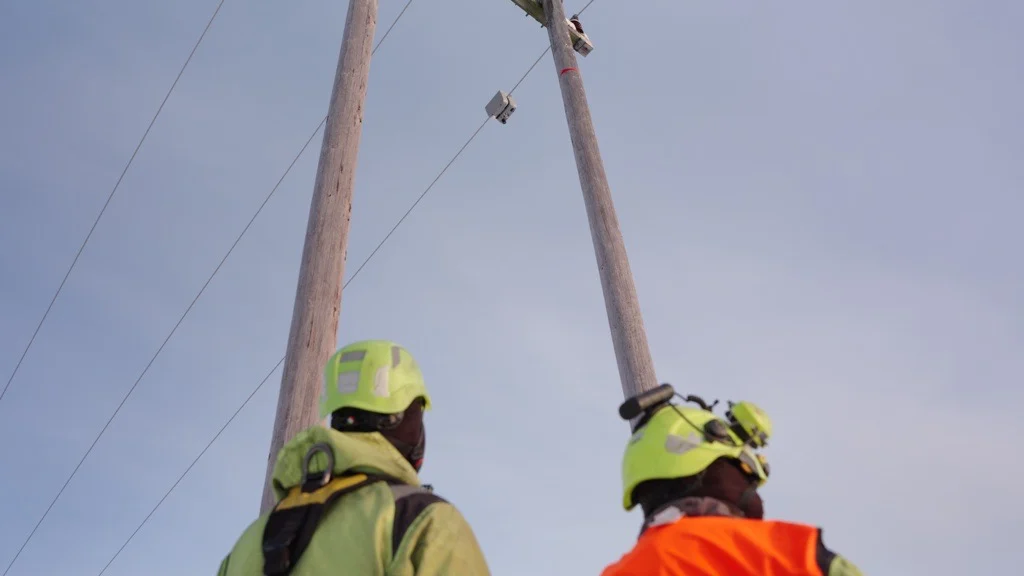
How real-time sensor technology is helping a Norwegian grid operator close the gap between capacity demand and supply.
The need for additional grid capacity is a well-known challenge among Norwegian distribution system operators. And the consensus across the power industry is clear: existing infrastructure can — and must — be utilised more effectively. The critical questions remain: what is the true condition of the grid, and how can the distribution and consumption of electrical power be optimised? Noranett has taken a decisive step toward answering both.
To gain a deeper understanding of Noranett’s challenges and how the company has chosen to address them, we spoke with Tony Molund, Grid Director at Noranett. With nearly 20 years of experience in the power sector, Molund brings significant insight into the industry’s evolving needs.
What are the core challenges, and are any of them unique to your grid area?
«One challenge is that our grid infrastructure is aging,» Molund begins. «At the same time, the demand for electrification across society continues to accelerate.» He points to several converging factors: the electrification of the transport sector and maritime industries, the establishment of new smolt facilities in the region, aquaculture operations transitioning away from diesel generators, and the broader phase-out of fossil fuels — all driving a substantial increase in power demand.
«What makes Noranett’s situation unique is that we are only permitted to connect customers requiring up to 1 MW. This is different from the rest of Norway,» Molund explains.
This restriction means Noranett cannot onboard medium- and large-scale installations, resulting in the loss of potential customers. The downstream effects extend beyond the company itself — impacting employment opportunities and revenue generation across the northern Nordland and southern Troms region. The power grid serves as a vital artery for local communities, and insufficient activity undermines the conditions for growth and prosperity.
Compounding the long-standing demand for more power, there are disagreements regarding forward-looking capacity forecasts.
«Right now, there are customers we are forced to decline because of disagreements with Statnett. It prevents us from onboarding new customers,» Molund explains.
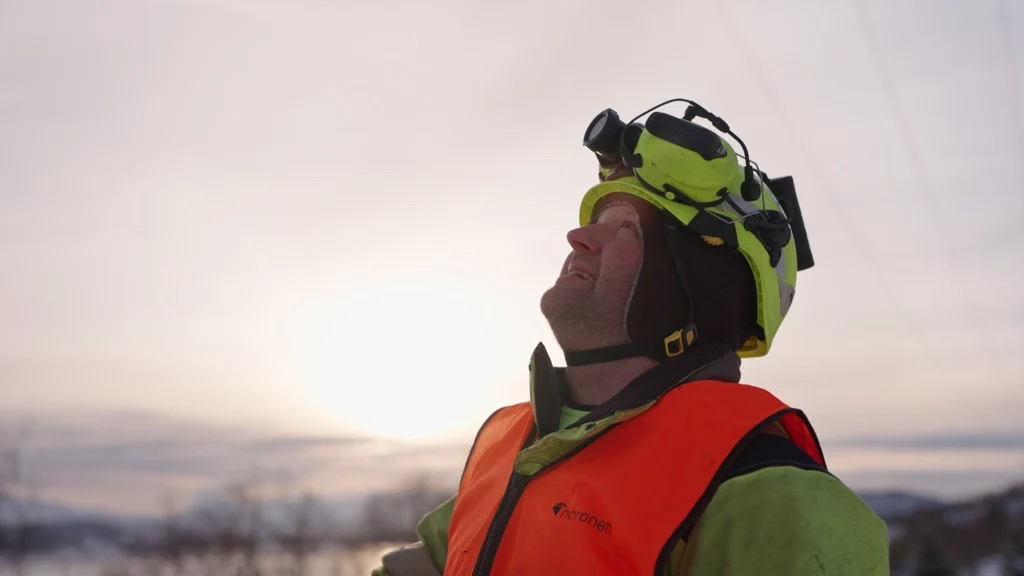
Noranett has undertaken a thorough assessment — reviewing historical data, conducting interviews with existing customers, and engaging with key stakeholders across fisheries, defence, municipal and county governments, and transport — to map the region’s future power requirements.
«In total, we are looking at demand in the range of several hundred megawatts, if all planned developments are accounted for. Not all of these plans will necessarily materialise, but a significant portion can be considered firm demand,» Molund notes.
To address the region’s capacity constraints, Noranett has implemented an arrangement enabling customer connections even where grid limitations exist — provided customers agree to curtailment when necessary. This model, known as Conditional Connection (TPV), is particularly relevant for customers in the 1–5 MW range. Noranett, together with two other grid operators, was among the first in Norway to formalise such an agreement with Statnett.
In 2024, you stated that conditional connection was the most realistic short-term solution. What is the current status?
«TPV remains the most straightforward measure we can implement to address the capacity challenge, and it is a solution for which we already have a contractual framework in place,» Molund says. «We currently have approximately 10 customers operating under conditional terms, and that number is growing. We are actively developing digital solutions to support these arrangements — including automated and semi-automated systems for both on/off switching and power curtailment under predefined conditions.»
«Other potential measures include improved grid utilisation, battery storage, or tariff-based approaches — but viable solutions in those areas have not yet been established. TPV is, as mentioned, the most accessible measure — one that is already part of our daily operations. We see a growing number of TPV agreements and a highly proactive and flexible customer base in the region. That said, we still have to turn away certain customers. We would like to connect more, but that requires Statnett’s cooperation,» Molund adds.
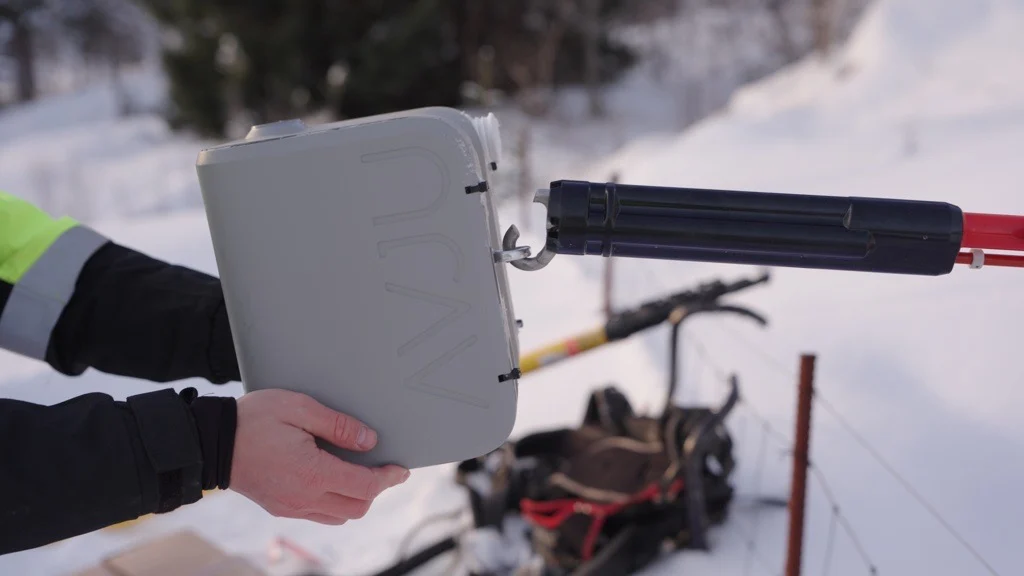
The region’s need for more power — and new methods for extracting greater value from existing grid infrastructure — is once again underscored.
This is precisely where Noranett’s pilot project with technology company Avju Solutions enters the picture, offering the potential to help bridge the gap between demand and available capacity.
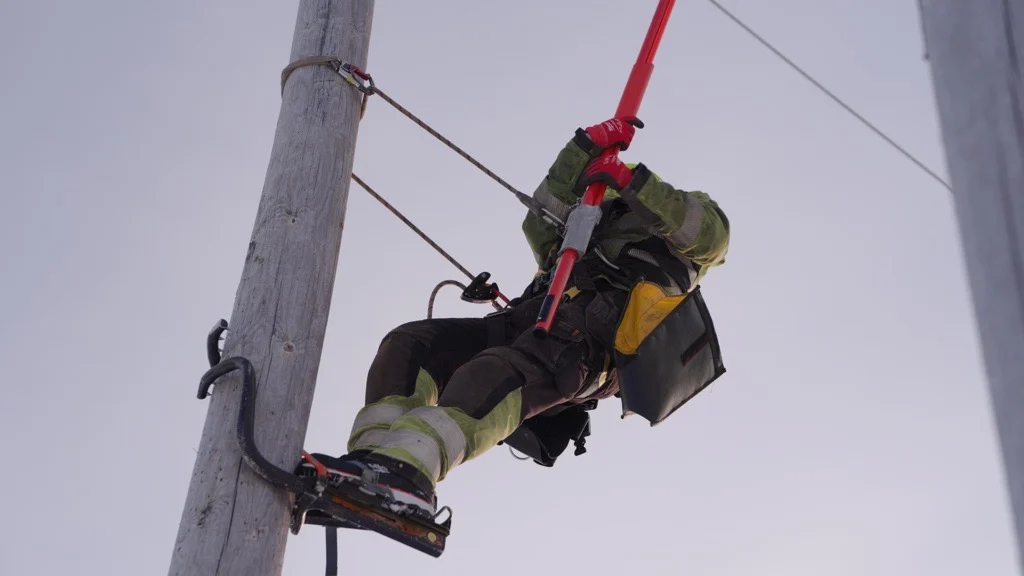
In February 2024, Noranett had sensors installed across its grid — units that collect data and deliver new, real-time insights into the actual condition of the network. Grid operators can now observe how power flows change in response to wind and temperature, and detect anomalies such as electrical noise, among other parameters.
«The sensors provide access to a wealth of new data, and there is clear value in this,» Molund explains. «But the important next step is to sit down and determine how we can extract the greatest possible value from these data.»
He notes that upgraded versions of the sensors have been deployed since the initial units from Avju Solutions were installed, and emphasises the considerable learning that has taken place throughout the pilot.
What is the most important insight gained so far from the pilot project?
«We already knew we could utilise the grid more effectively — but now we have that confirmed with actual data,» Molund says.
He goes on to describe a new dimension of data availability that the project has unlocked.
«The limitation is no longer data itself — it is the time required to analyse how best to apply it,» Molund explains.
«We are still in a learning phase. Avju Solutions produces reports for us and provides recommendations on how the sensor data can be put to use,» he continues.
Noranett is the first major grid operator to participate in a pilot project with Avju Solutions. Several additional operators have since joined as the potential of the technology becomes increasingly evident. Molund expresses both confidence and anticipation regarding future returns.
«I believe the project has significant potential, and that we have not yet seen all of its benefits,» the Grid Director states.
The story of Noranett demonstrates that even in the face of considerable challenges, meaningful progress is achievable. It may well be that it is precisely during periods of constraint that the most effective solutions emerge — and when multiple stakeholders collaborate, the resulting synergies can be transformative.
Read the norwegian version of the article at Europower.no